(3991 productos)

Hornby
Model: TT gauge DC. Passenger coach Medusa in Pullman colours.
HORN TT4003C

Hornby
Model: TT gauge DC. Passenger coach Iolanthe in Pullman colours.
HORN TT4003D

Hornby
Model: TT gauge DC. Cynthia passenger car in Pullman colors.Prototype: The first Pullman cars appeared on British rails in 1874 and brought with them a new standard of travel comfort. Originally imported from the USA, they were soon manufactured in Great Britain by the Pullman Car Company, founded in 1882, which operated luxurious first-class services with several railway companies. The cars offered elegant interiors, lavishly set tables, and hot meals served directly at your seat.With their dis
HORN TT4003E

Hornby
Model: TT gauge DC. Rosamund passenger car in Pullman colors.Prototype: The first Pullman cars appeared on British rails in 1874 and brought with them a new standard of travel comfort. Originally imported from the USA, they were soon manufactured in Great Britain by the Pullman Car Company, founded in 1882, which operated luxurious first-class services with several railway companies. The cars offered elegant interiors, lavishly set tables, and hot meals served directly at your seat.With their di
HORN TT4003G

Hornby
Model: TT Gauge. Kitchen First Class Fingall Pullman passenger car.Prototype: Pullman carriages first appeared on British railways in 1874 and were initially used by the Midland Railway between Bradford and London. Initially imported from the USA, the British Pullman Car Company, named after George Pullman, was founded in 1882. It collaborated with various railway companies and offered luxurious first-class travel with in-seat service. The carriages were manufactured in Brighton and by major car
HORN TT4003H

Hornby
Model: TT gauge DC. Rosamund passenger car in Pullman colors.Prototype: The first Pullman cars appeared on British rails in 1874 and brought with them a new standard of travel comfort. Originally imported from the USA, they were soon manufactured in Great Britain by the Pullman Car Company, founded in 1882, which operated luxurious first-class services with several railway companies. The cars offered elegant interiors, lavishly set tables, and hot meals served directly at your seat.With their di
HORN TT4004B

Hornby
Model: TT Gauge. Passenger car Brake Car 209 Third Class Pullman.Prototype: Pullman carriages first appeared on British railways in 1874 and were initially used by the Midland Railway between Bradford and London. Initially imported from the USA, the British Pullman Car Company, named after George Pullman, was founded in 1882. It collaborated with various railway companies and offered luxurious first-class travel with in-seat service. The carriages were manufactured in Brighton and by major carri
HORN TT4004C
Hornby
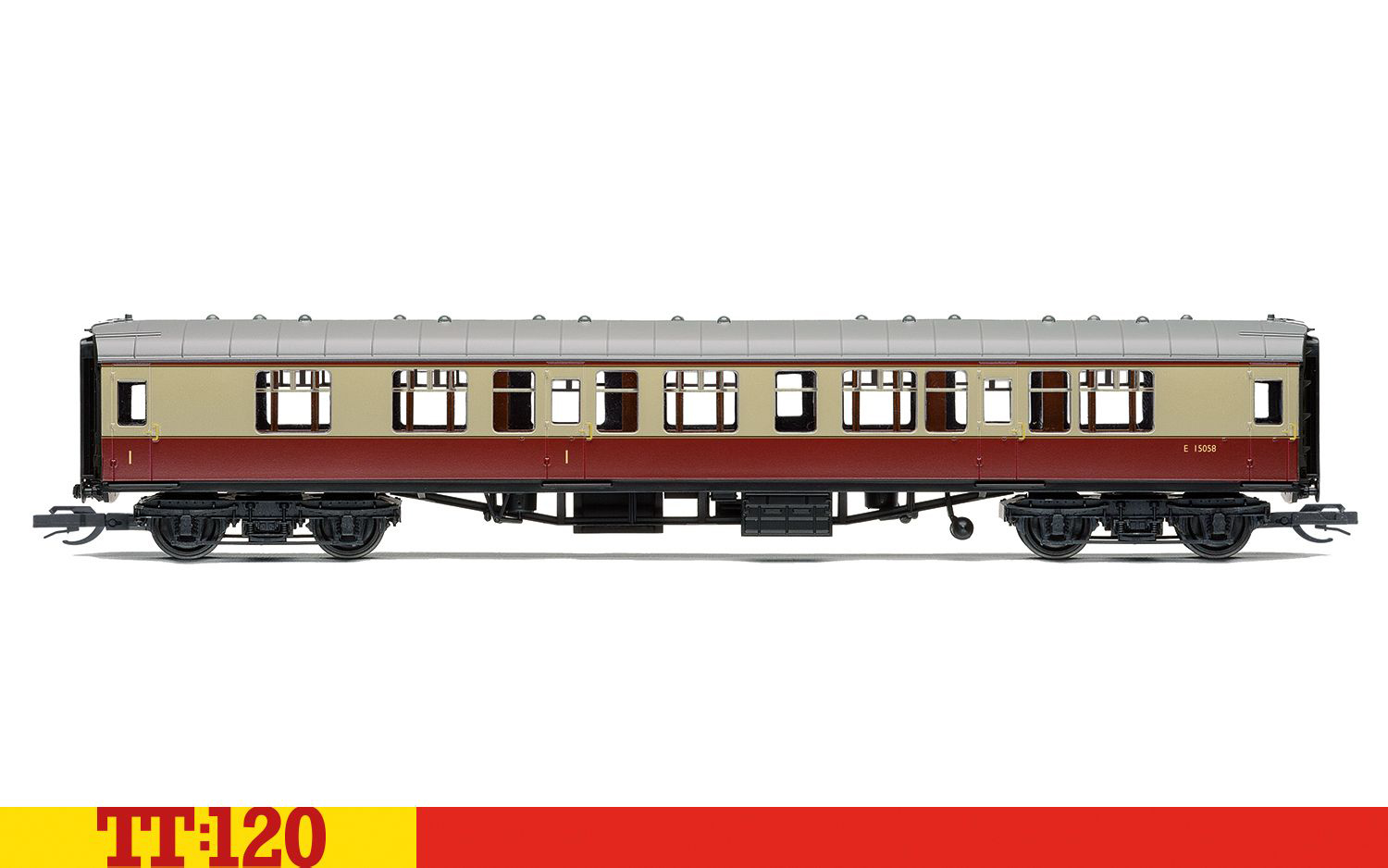
Hornby TT4005 BR Mk1 Composite Corridor E15058 Era 4
HORN TT4005
Hornby
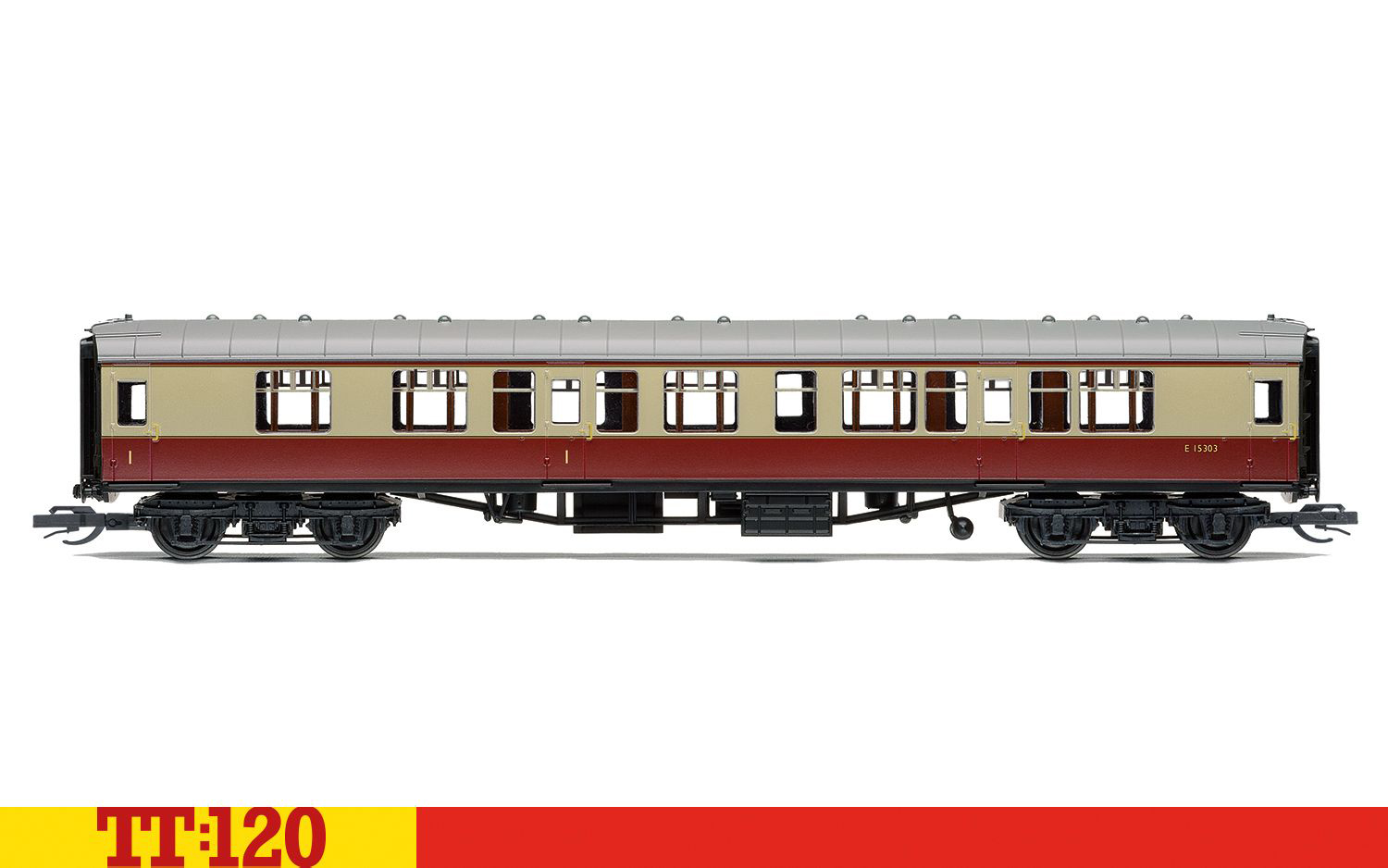
Hornby TT4005A BR Mk1 Composite Corridor E15303 Era 4
HORN TT4005A

Hornby
BR Mk1 passenger car E15481, Era IV
HORN TT4005B
Hornby
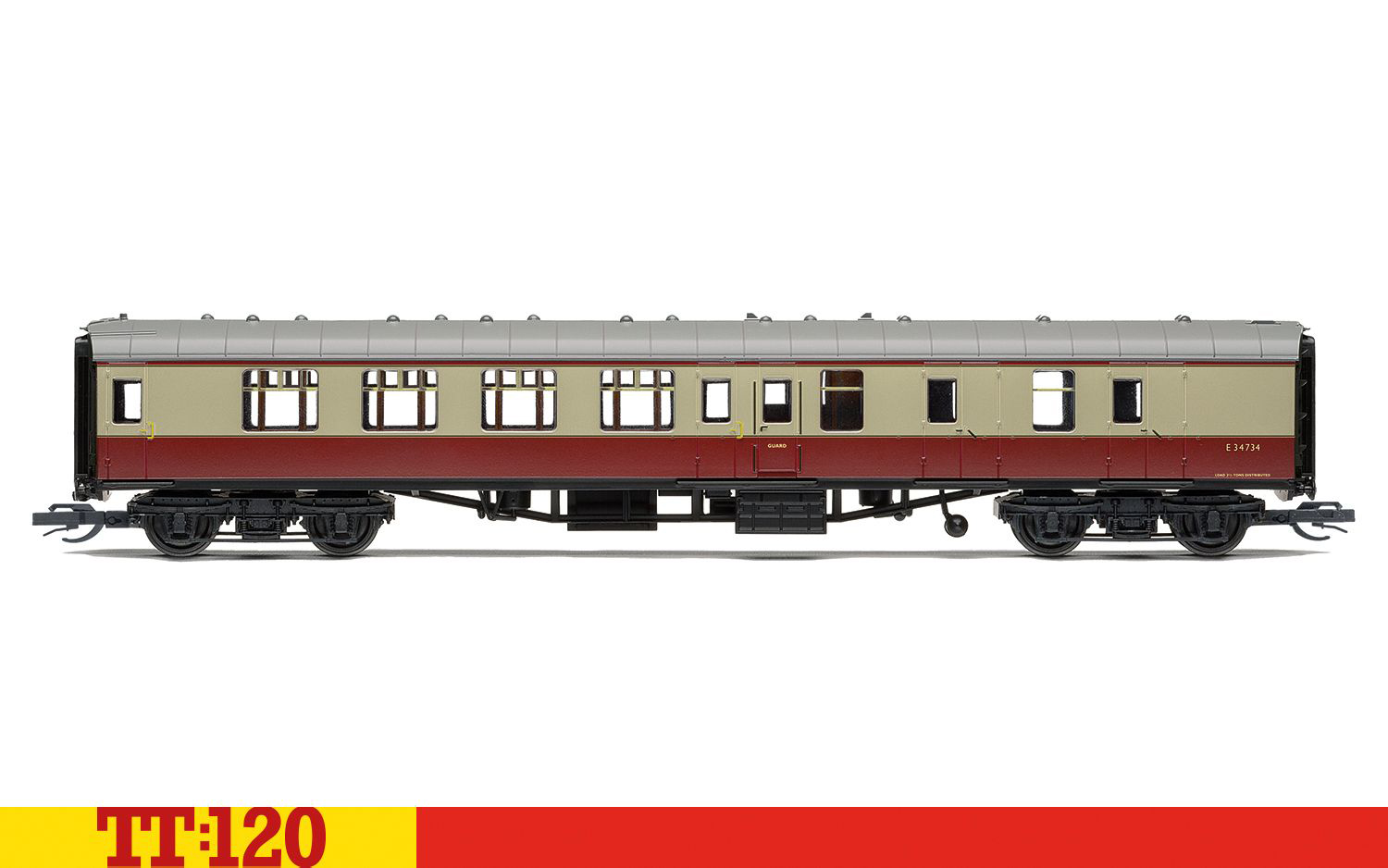
Hornby TT4006 BR Mk1 Brake Second E34734 Era 4
HORN TT4006
Hornby
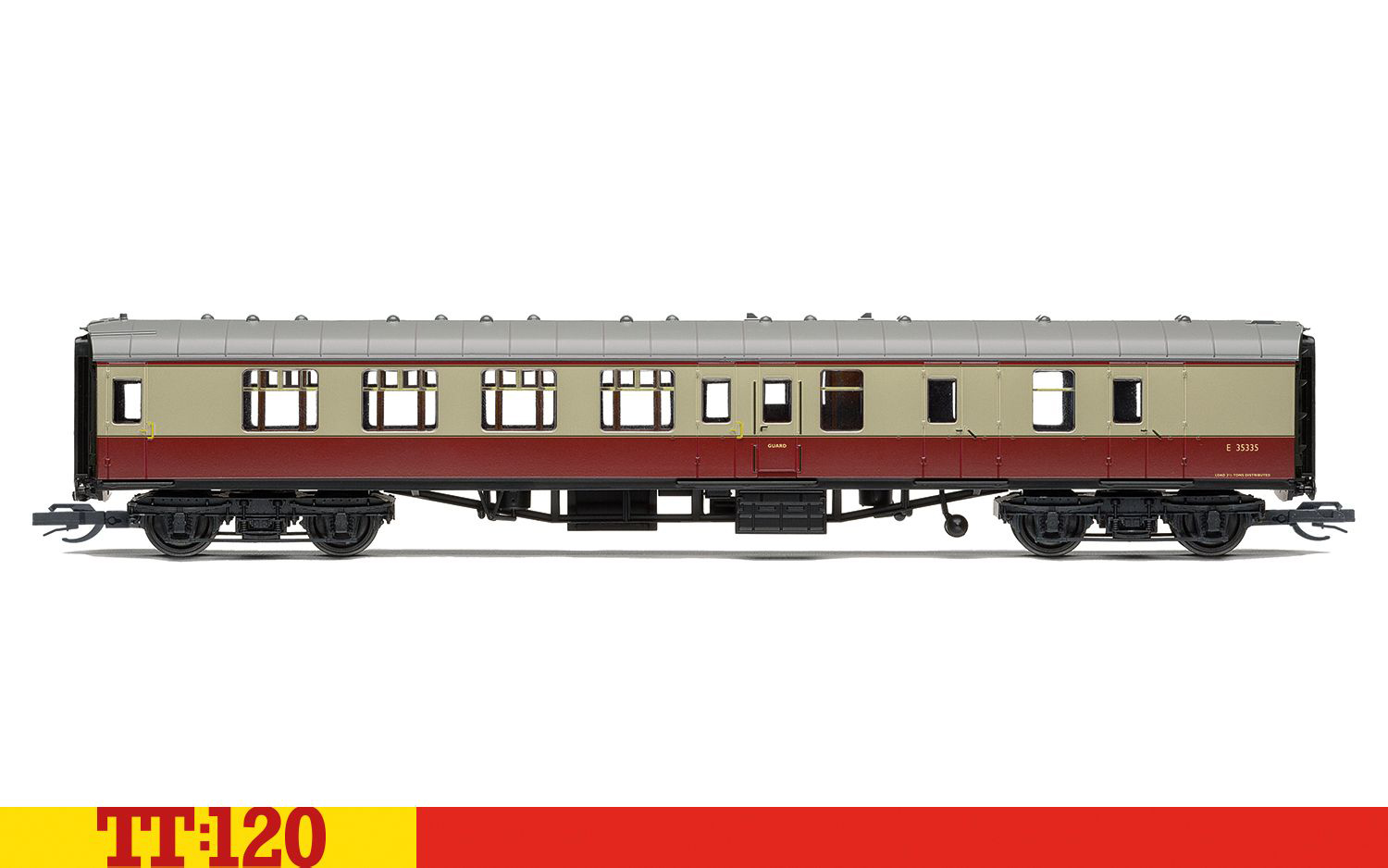
Hornby TT4006A BR Mk1 Brake Second E35335 Era 4
HORN TT4006A
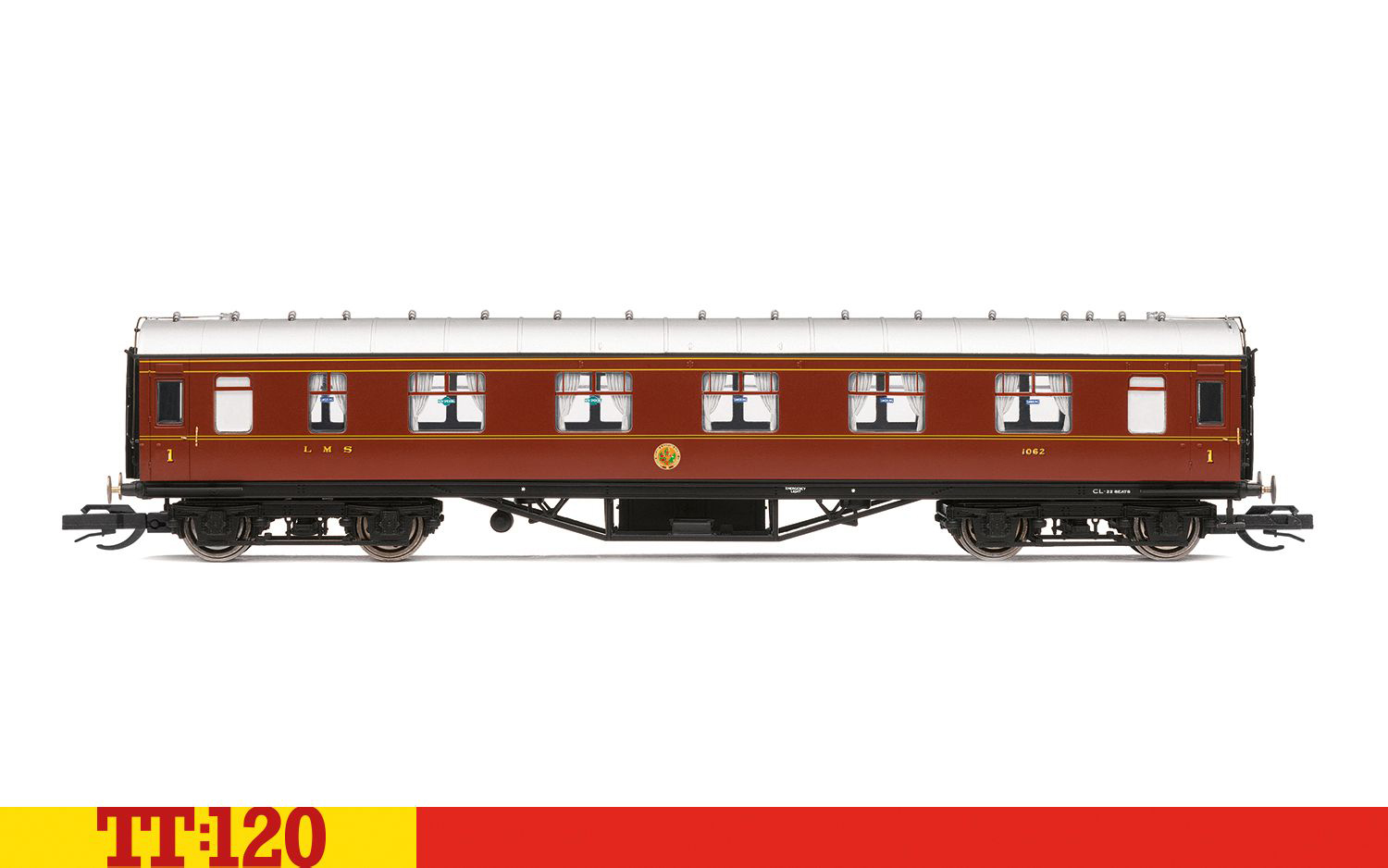
Hornby
Hornby TT4007 LMS 57' Corridor First 1062 Era 3
HORN TT4007
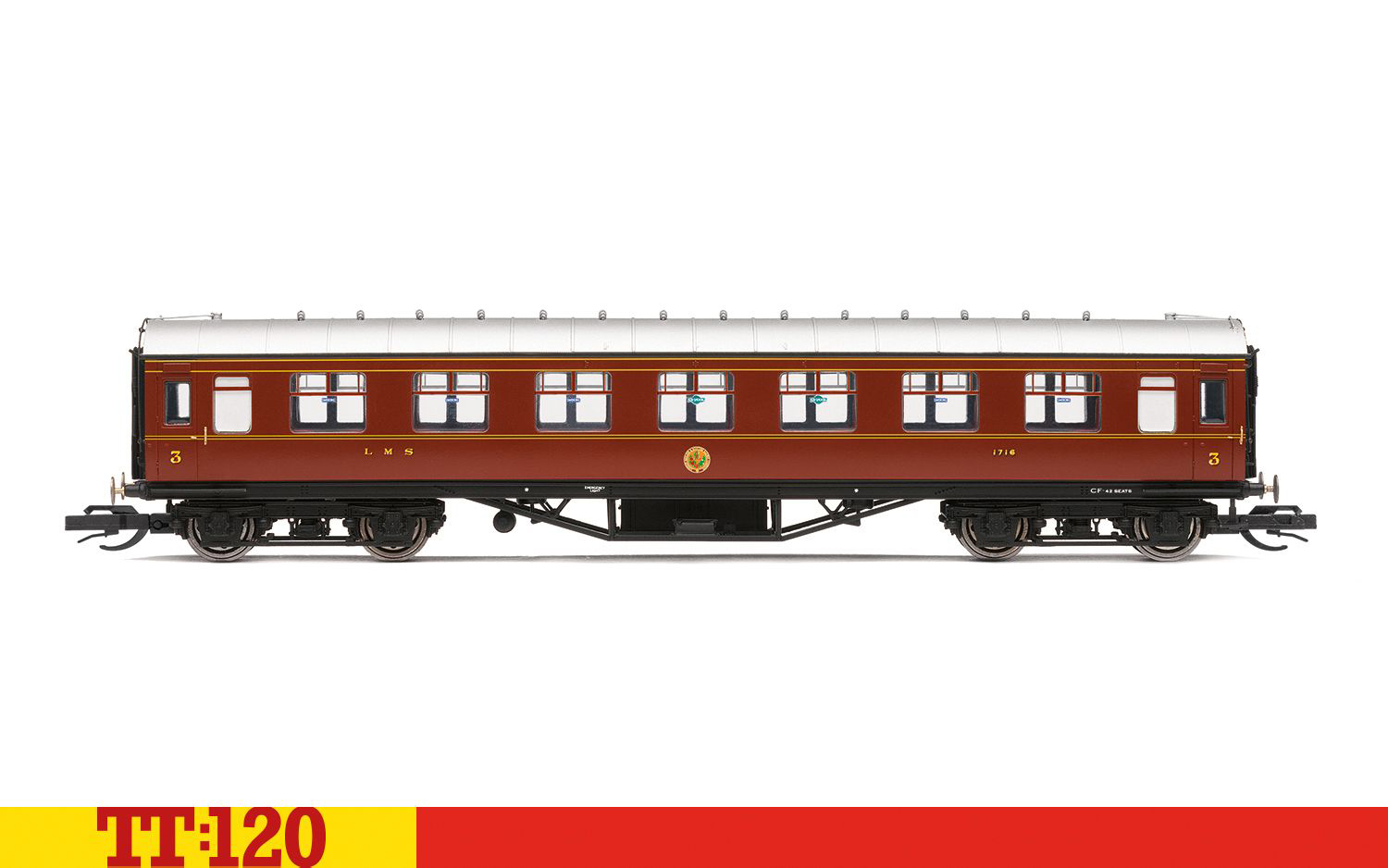
Hornby
Hornby TT4008 LMS 57' Corridor Third 1716 Era 3
HORN TT4008

Hornby
Hornby TT4008A LMS 57' Corridor Third 1573 Era 3
HORN TT4008A
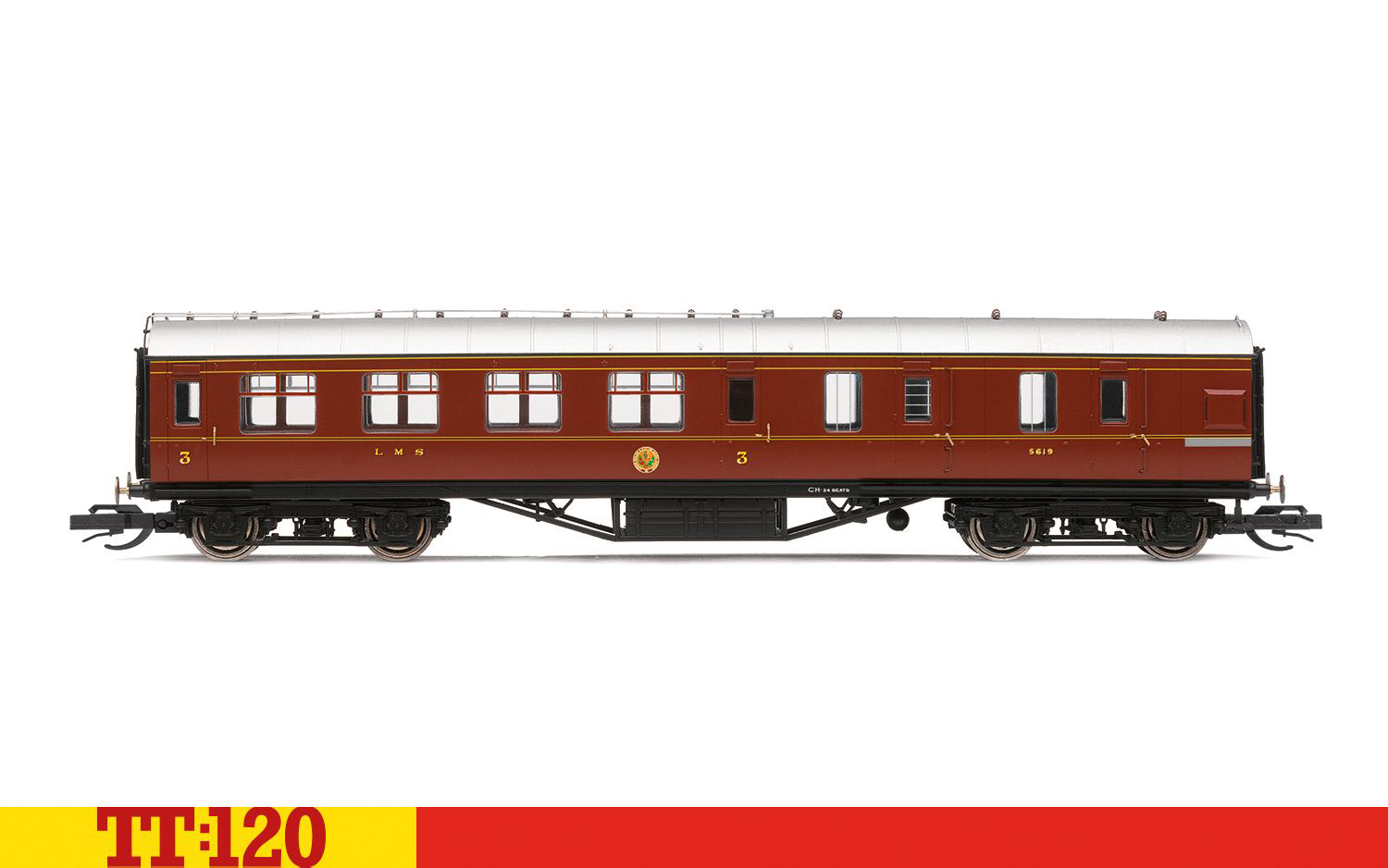
Hornby
Hornby TT4009 LMS 57' Brake Third 5619 Era 3
HORN TT4009
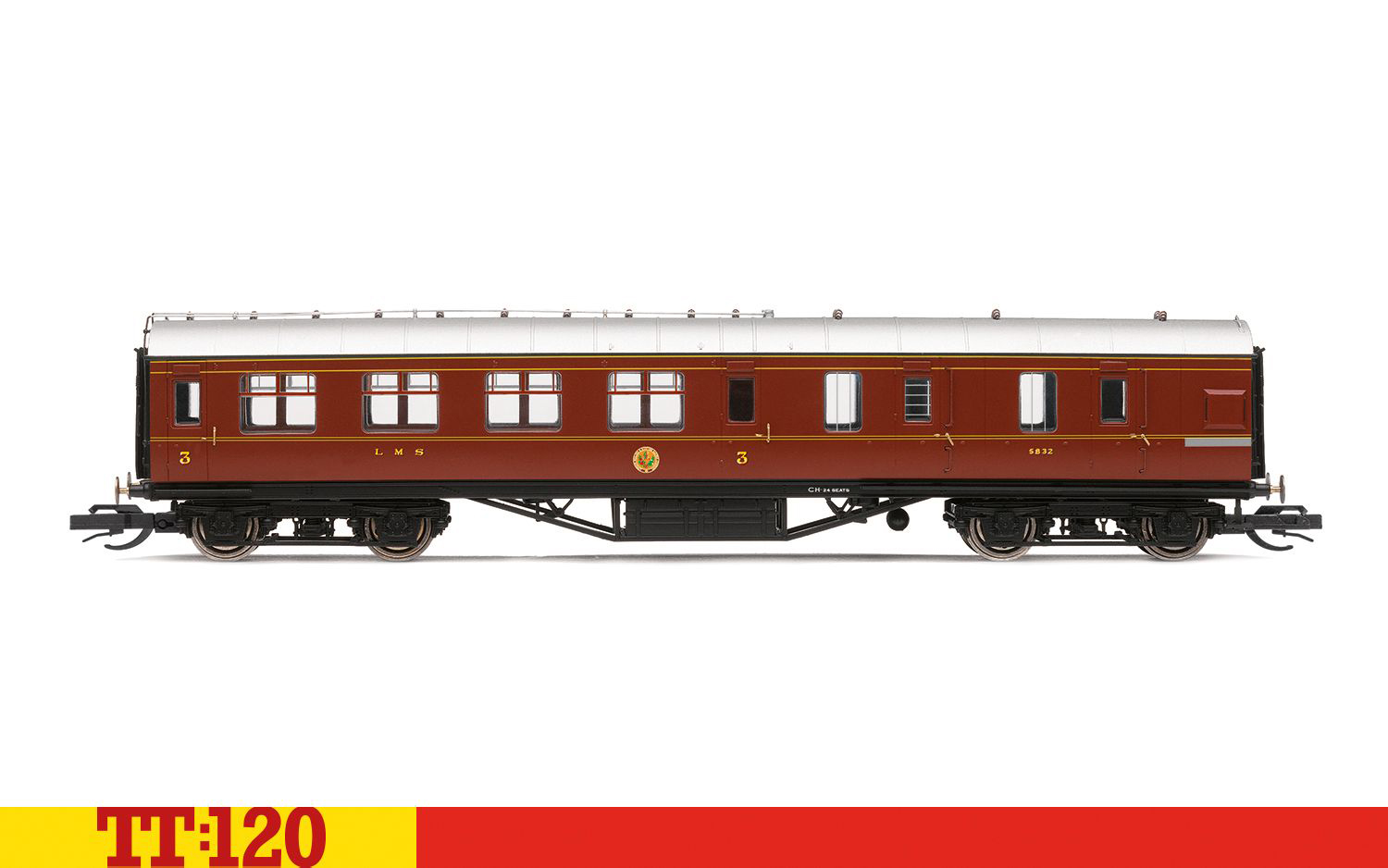
Hornby
Hornby TT4009A LMS 57' Brake Third 5832 Era 3
HORN TT4009A
Hornby
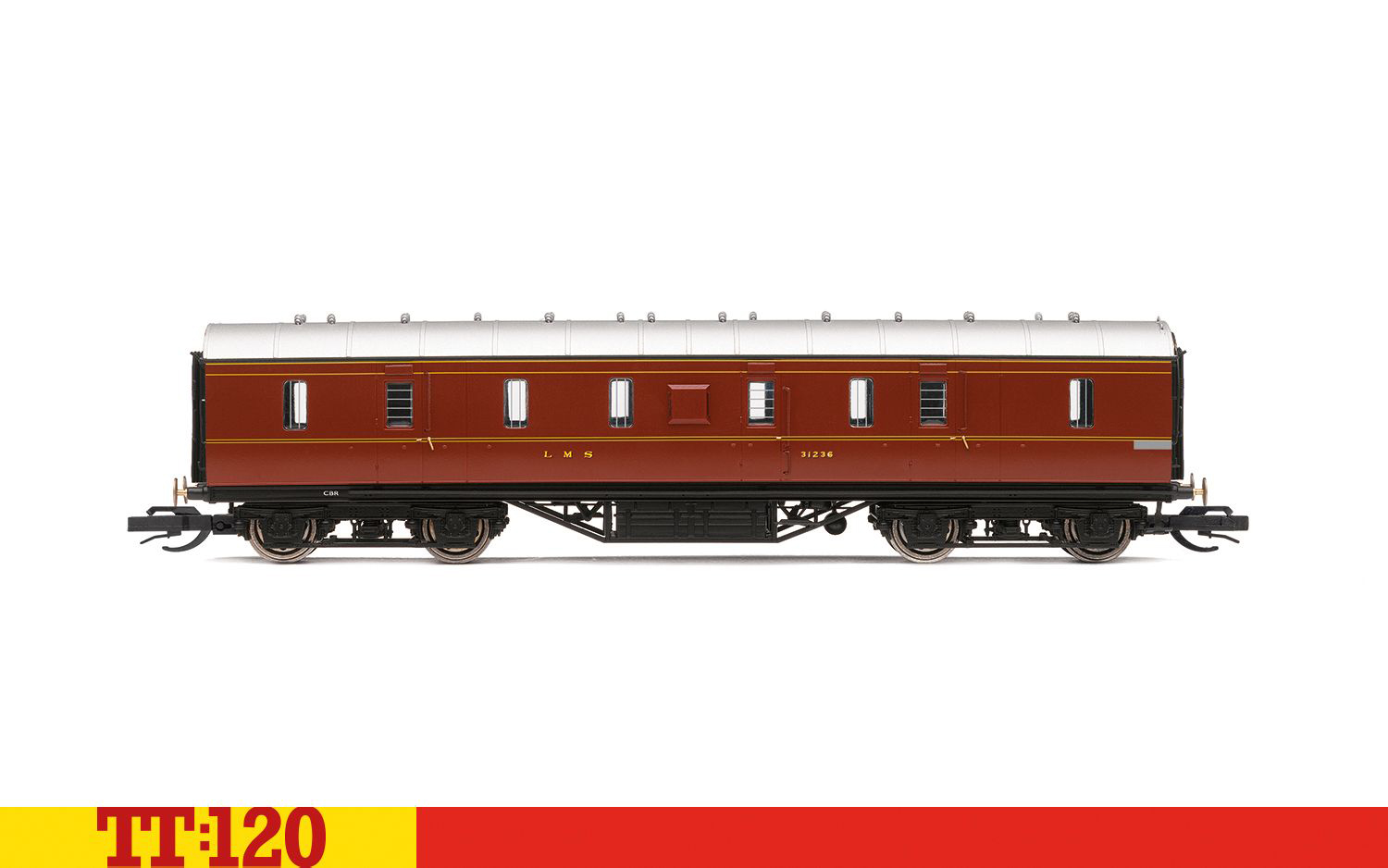
Hornby TT4010 LMS 50’ Passenger Brake 31236 Era 3
HORN TT4010

Hornby
Model: TT gauge. Passenger coach Mk2E Tourist Standard Open 5784 of BR.Prototype: The British Rail Mark 1 coaches were unsuitable for high-speed trains. They complemented steam locomotives well, which were replaced in the 1960s by diesel and electric traction. The Mark 2 coach was introduced in 1964 and featured an all-steel construction. Although it was a development of the Mark 1, the two series had very little in common and showed only minor similarities.In service, Mark 2 coaches were common
HORN TT4011

Hornby
Model: TT gauge. Passenger coach Mk2E First Open 3234 of BR.Prototype: The British Rail Mark 1 coaches were unsuitable for high-speed trains. They complemented steam locomotives well, which were replaced in the 1960s by diesel and electric traction. The Mark 2 coach was introduced in 1964 and featured an all-steel construction. Although it was a development of the Mark 1, the two series had very little in common and showed only minor similarities.In service, Mark 2 coaches were commonly seen in
HORN TT4012

Hornby
Model: TT gauge. Passenger coach Mk2E Brake Standard Open 9504 of BR.Prototype: The British Rail Mark 1 coaches were unsuitable for high-speed trains. They complemented steam locomotives well, which were replaced in the 1960s by diesel and electric traction. The Mark 2 coach was introduced in 1964 and featured an all-steel construction. Although it was a development of the Mark 1, the two series had very little in common and showed only minor similarities.In service, Mark 2 coaches were commonly
HORN TT4013

Hornby
Model: TT gauge. Passenger coach Mk2E Tourist Standard Open 5889 of BR.Prototype: The British Rail Mark 1 coaches were unsuitable for high-speed trains. They complemented steam locomotives well, which were replaced in the 1960s by diesel and electric traction. The Mark 2 coach was introduced in 1964 and featured an all-steel construction. Although it was a development of the Mark 1, the two series had very little in common and showed only minor similarities.In service, Mark 2 coaches were common
HORN TT4014

Hornby
Model: TT gauge. Passenger coach Mk2E First Open 3237 of BR.Prototype: The British Rail Mark 1 coaches were unsuitable for high-speed trains. They complemented steam locomotives well, which were replaced in the 1960s by diesel and electric traction. The Mark 2 coach was introduced in 1964 and featured an all-steel construction. Although it was a development of the Mark 1, the two series had very little in common and showed only minor similarities.In service, Mark 2 coaches were commonly seen in
HORN TT4015

Hornby
Model: TT gauge. Passenger coach Mk2E Brake Standard Open 9502 of BR.Prototype: The British Rail Mark 1 coaches were unsuitable for high-speed trains. They complemented steam locomotives well, which were replaced in the 1960s by diesel and electric traction. The Mark 2 coach was introduced in 1964 and featured an all-steel construction. Although it was a development of the Mark 1, the two series had very little in common and showed only minor similarities.In service, Mark 2 coaches were commonly
HORN TT4016