(3796 productos)

Hornby
Model: TT gauge DC. Freight wagon Vent Van Cadbury.Prototype: This ventilated box van operated by British Railways and more specifically used by Cadbury Brothers of Bourneville for the transportation of their products and ingredients, is finished in a brown livery with the ‘Cadbury’ branding and visible running number.
HORN TT6043

Hornby
Model: TT gauge DC. Freight wagon set Vent Van of the Britisch Railways.The set consists of three ventilated boxcars from the early days of British Railways, each individually numbered and painted brown. The vents at both ends allowed airflow and ensured a cooler air temperature, which was beneficial for the transport of perishable goods.
HORN TT6044

Hornby
Model: TT gauge DC. Freight wagon set 12T Tank Wagon of the Royal Daylight .Prototype: These were built in vast numbers for private owners to move all types of bulk liquids by rail, including petroleum, oil, tar, paraffin and chemicals. Although there were many variations in design, they were a common sight on Britain’s railways from the early part of the 20th century. Typically, they would be built on a wooden-framed chassis with cross timbers for the metal tank to sit between, then braced with
HORN TT6046

Hornby
Model: TT gauge DC. Freight wagon 12T Tank Wagon Fina.Prototype: These were built in vast numbers for private owners to move all types of bulk liquids by rail, including petroleum, oil, tar, paraffin and chemicals. Although there were many variations in design, they were a common sight on Britain’s railways from the early part of the 20th century. Typically, they would be built on a wooden-framed chassis with cross timbers for the metal tank to sit between, then braced with wire straps securing
HORN TT6047

Hornby
Model: TT gauge DC. Freight wagon Hopper Wagon ECC CDA.Prototype: The CDA hopper was a purpose-designed replacement for antiquated China clay wagons, combining robust HAA mechanicals with a protective canvas hood. This four-wheeled, air-braked covered hopper with visible running number ‘375026’ and ‘ECC International’ logo was pulled by a range of British diesel locomotives.
HORN TT6048

Hornby
Model: TT gauge DC. Freight wagon Hopper Wagon ECC CDA.Prototype: The CDA hopper was a purpose-designed replacement for antiquated China clay wagons, combining robust HAA mechanicals with a protective canvas hood. This four-wheeled, air-braked covered hopper with visible running number ‘375026’ and ‘ECC International’ logo was pulled by a range of British diesel locomotives.
HORN TT6049

Hornby
Model: TT gauge DC. Freight wagon Ballast Wagon Coalfish of the EWS.Prototype: Part of the later Doncaster-built EWS "Coalfish" ballast wagon conversions, this MHA 'Coalfish' Ballast wagon was rebodied from MGR HAA hoppers between 2003–2004 under TOPS code MHA.
HORN TT6050

Hornby
Model: TT gauge DC. Freight wagon set Ballast Wagon Coalfish of the EWS.Prototype: Part of the later Doncaster-built EWS "Coalfish" ballast wagon conversions, this MHA 'Coalfish' Ballast wagon was rebodied from MGR HAA hoppers between 2003–2004 under TOPS code MHA.
HORN TT6051

Hornby
Model: TT Gauge. Goods wagon 7 Plank Wagon Arthur Wharton Ltd 3018.Prototype: Before the introduction of steel wagons in the 1940s, wooden wagons like this one, built to the RCH standard design of 1923, were also used for transporting coal between the mines and the coal merchants' storage yards. This wagon belonged to the fleet of the Leeds coal merchant Arthur Wharton Ltd.
HORN TT6052

Hornby
Model: TT Gauge. 7 Plank Wagon Mortimore.Prototype: Thousands of privately owned open freight wagons transported coal and other minerals across the country for their owners. This 12-ton example belonged to the coal merchant Mortimore of Chippenham. The weigh house on the old railway station grounds bears the company's name and is a Grade II listed building.
HORN TT6053

Hornby
Model: TT Gauge. Freight wagon 7 Plank Wagon A & H Betts 45.Prototype: The coal trading firm A & H Betts, founded in 1887 and based in Battersea, South London, operated a depot in Stewarts Lane and had a contract there with the South Eastern & Chatham Railway. In the 1920s, the company invested in a number of these wagons, which had a top-hinged end door.
HORN TT6054

Hornby
Model: TT Gauge. TTA Tanker BRT freight wagon 57502 Amoco.Prototype: BRT owned a large number of “TTA” tankers, which were leased to many oil companies, including this example in the colors of Amoco, an American chemical and oil company founded in Chicago in 1889 as Standard Oil Company and which became part of the British conglomerate BP in 1998.
HORN TT6055

Hornby
Set of 3 tank wagons type TTA Tanker of Amoco, Era IV-V
HORN TT6056

Hornby
Container wagon type KFA of the Touax, Era VI
HORN TT6057

Hornby
Touax KFA type container wagon, Era VI
HORN TT6058
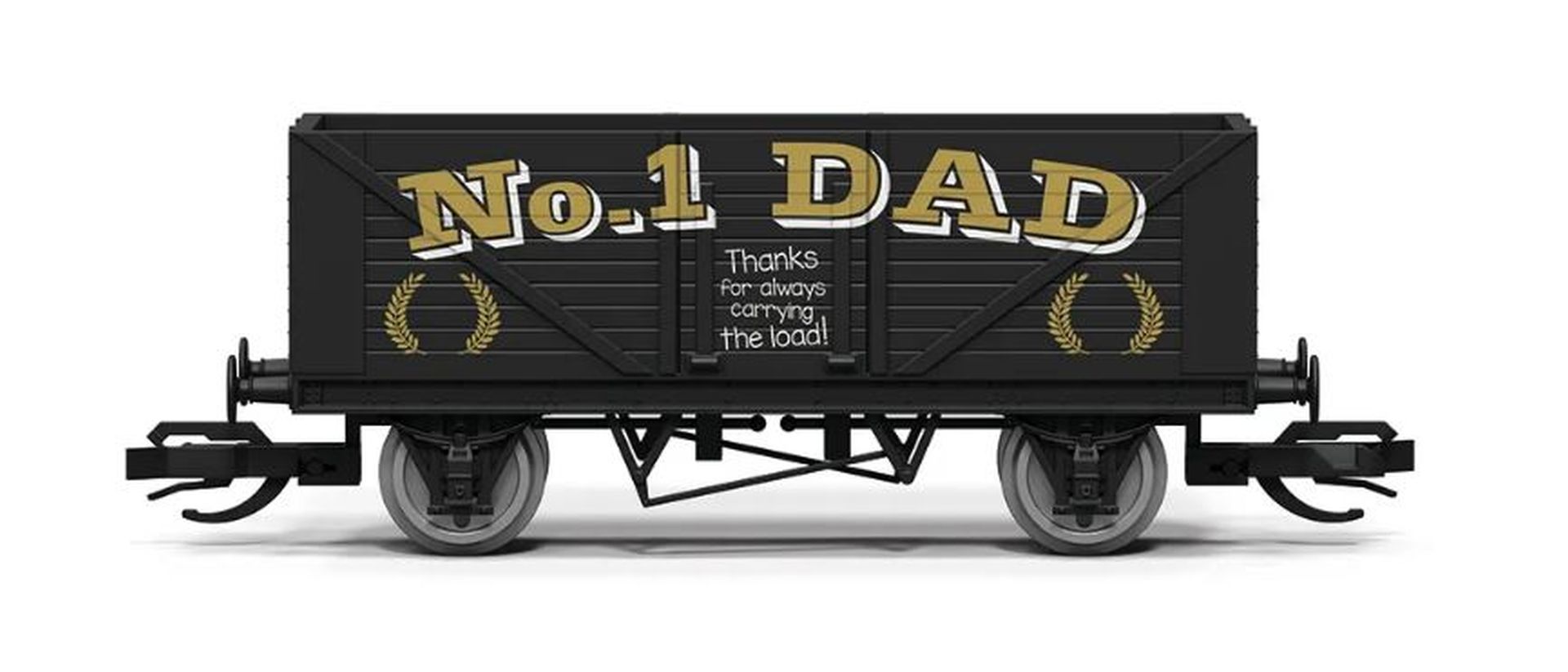
Hornby
Offener Güterwagen, Fathers Day Wagon, Ep.III-VI
HORN TT6059

Hornby
EWS type YGA freight wagon, Era V
HORN TT6062

Hornby
Model: TT Gauge. YGB Seacow 980100 Civil Engineers freight wagon.Prototype: In the 1990s, the vacuum brake cylinders were removed from the vacuum-braked 'Sealion' wagons. Those whose vacuum brake lines remained were reclassified as YGB 'Seacow' wagons. The designations 'Sealion' and 'Seacow' reflect British Rail's practice of naming its technical rolling stock after marine animals.
HORN TT6063

Hornby
Model: TT Gauge. YGH Sealion 982838 Civil Engineers freight wagon.Prototype: The Sealion locomotives replaced the Walrus locomotives. The first examples were built in 1971 by British Rail Engineering Ltd. These were originally equipped with a dual braking system consisting of vacuum and compressed air brakes. They remained in service from their initial registration until the 1990s, when their vacuum brake cylinders were removed and they were reclassified as Seacows.
HORN TT6064

Hornby
Model: TT Gauge. YGH Seacow 982792 Civil Engineers freight wagon.Prototype: The "Sealion" and "Seacow" series freight wagons have three unloading chutes: one on the outside of each rail and one in the middle for filling between the sleepers. At each end of the wagon is a platform with three large handwheels for controlling the chute flaps. Hundreds of these 40-tonne wagons were built at the Shildon and Ashford works.
HORN TT6065

Hornby
3 pcs. Set YGB Seacow Wagon of the BR, era IV-V
HORN TT6066

Hornby
Model: TT Gauge. Three YGB Sealion freight wagons of the Civil Engineers.Prototype: The first wagons of this type built by British Rail were the vacuum-braked "Walrus" wagons. They had a similar unloading system, adopted from the Southern Railway's Meldon bogie wagons, with three sets of chutes for unloading the ballast. Each of the three wagons in the train set has a different TOPS operating number.
HORN TT6067

Hornby
Model: TT Gauge. Banana Van freight wagon B880681.Prototype: These transporters were commonly used to move bananas from the port to distribution centers and were insulated to protect the bananas from extreme temperatures during transport. They were in use from the 1930s to the 1960s in places like Garston, Southampton, and Avonmouth, most equipped with vacuum brakes, and some had steam heating to aid the ripening process.
HORN TT6068

Hornby
Model: TT Gauge. Freight wagon Vent Van 581932 LMS.Prototype: Ventilated freight wagons were used for transporting perishable goods, and the LMS inherited many of these wagons from its predecessor companies, such as the Midland Railway and the London & North Western Railway. During the interwar period, it introduced its own standard wagons, which remained in large numbers under British Rail BR and with users such as the Ministry of Defence.
HORN TT6069